


Computer Vision Internship
Detection, tracking and OCR on footage from real cameras: bad lighting, motion blur, odd angles and all. Demo clips are not the test.
model.fit(X_train, y_train)
score = evaluate(model, X_val)
- OpenCV
- YOLO
- PyTorch
- OCR
- Tracking
- Roboflow
- OpenCV
- YOLO
- PyTorch
- OCR
- Tracking
- Roboflow
- OpenCV
- YOLO
- PyTorch
- OCR
- Tracking
- Roboflow
- OpenCV
- YOLO
- PyTorch
- OCR
- Tracking
- Roboflow
- OpenCV
- YOLO
- PyTorch
- OCR
- Tracking
- Roboflow
- OpenCV
- YOLO
- PyTorch
- OCR
- Tracking
- Roboflow
- OpenCV
- YOLO
- PyTorch
- OCR
- Tracking
- Roboflow
- OpenCV
- YOLO
- PyTorch
- OCR
- Tracking
- Roboflow
Real cameras do not look like the dataset
Your model will score 96% on the validation set and fall apart on the actual camera. Fixing that gap (lighting, angle, resolution, class imbalance) is what this track is really about.
- 1You collect and label footage from a real camera
- 2You train a detector and measure it on held-out video
- 3Your mentor reviews the failure cases with you
- 4You optimise for frame rate and deploy on real hardware
Weeks 1 to 3 cover Python and image fundamentals from zero.
# Week 8: detect, track, count, without double counting
tracker = ByteTrack(track_thresh=0.45, match_thresh=0.8)
line    = LineZone(start=Point(0, 540), end=Point(1920, 540))

for frame in stream:
    det = model(frame, imgsz=960, conf=0.35)[0]
    det = Detections.from_ultralytics(det)
    det = det[det.class_id == PERSON]

    det = tracker.update(det, frame)      # stable ids across frames
    line.trigger(det)                     # count only on crossing

    annotate(frame, det, f"in={line.in_count} out={line.out_count}")
Eight things you will actually be able to do
Image fundamentals
Colour spaces, histograms, filtering, edges and morphological operations.
OpenCV
Reading video, transformations, contours and the toolkit every CV job assumes.
Object detection
YOLO family models, anchors, confidence, NMS and mAP as a real metric.
Data and labelling
Collecting footage, annotating properly and building a dataset that generalises.
Tracking
Assigning stable identities across frames and counting without duplicates.
OCR
Text detection and recognition on documents, plates and low-quality scans.
Real-time performance
Resolution trade-offs, batching, TensorRT and hitting a frame budget.
Deployment
Running on edge devices, streaming input and packaging the pipeline.
The 12-week plan
Four phases. Each one ends in a deliverable that is reviewed and graded before the next opens.
Images and OpenCV
The fundamentals under every vision model.
- Python, NumPy and image representation
- Colour spaces, filtering, thresholding, morphology
- Contours, transformations and geometric operations
- Reading video streams and handling frames
A classical vision pipeline that solves a real task without any neural network.
Detection
Training a model to find things in your own footage.
- CNN and detection architecture fundamentals
- Dataset collection, annotation and augmentation
- Training YOLO models and reading mAP honestly
- Failure analysis on held-out real footage
A trained detector on a dataset you collected and labelled yourself, evaluated on unseen video.
Tracking and OCR
From boxes per frame to a system that understands a scene.
- Multi-object tracking and stable identities
- Line and zone counting without double counts
- Text detection and recognition pipelines
- Handling occlusion, blur and lighting changes
A tracking and counting system running on live video with measured accuracy against manual counts.
Ship it
Making it fast enough to actually run.
- Profiling, resolution trade-offs and batching
- Model export, quantisation and TensorRT
- Edge deployment, streaming and alerting
- Portfolio case study, CV rewrite, mock interview
A deployed real-time pipeline hitting its frame budget, plus a public repository and case study.
Every intern ships a vision system that runs live
You take an Ezitech brief (people counting, safety-gear detection, document OCR, plate recognition), and make it work on a real camera feed, not a curated dataset.
- A dataset you collected and labelled yourself
- Detection plus tracking, measured on real footage
- Running in real time on real hardware
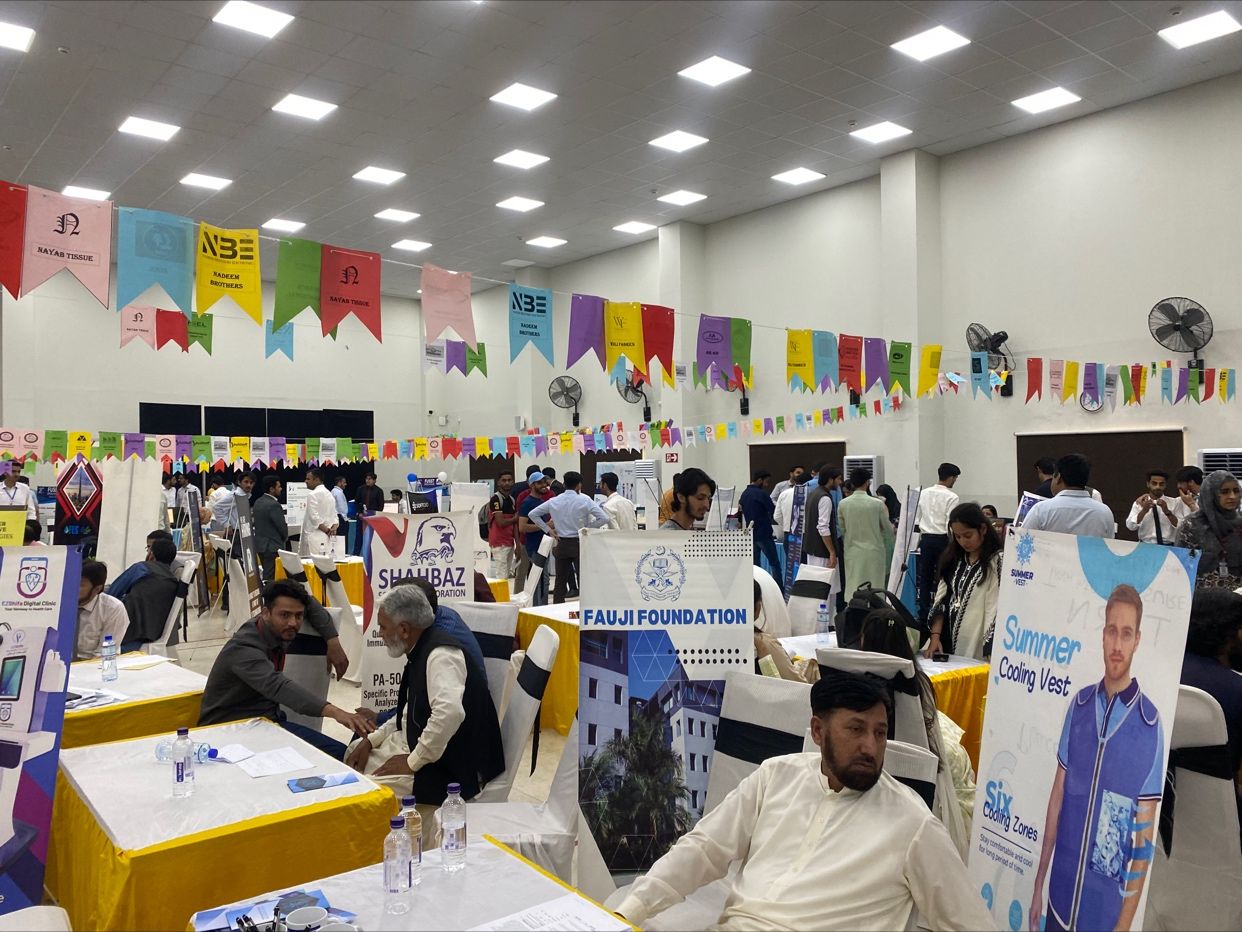


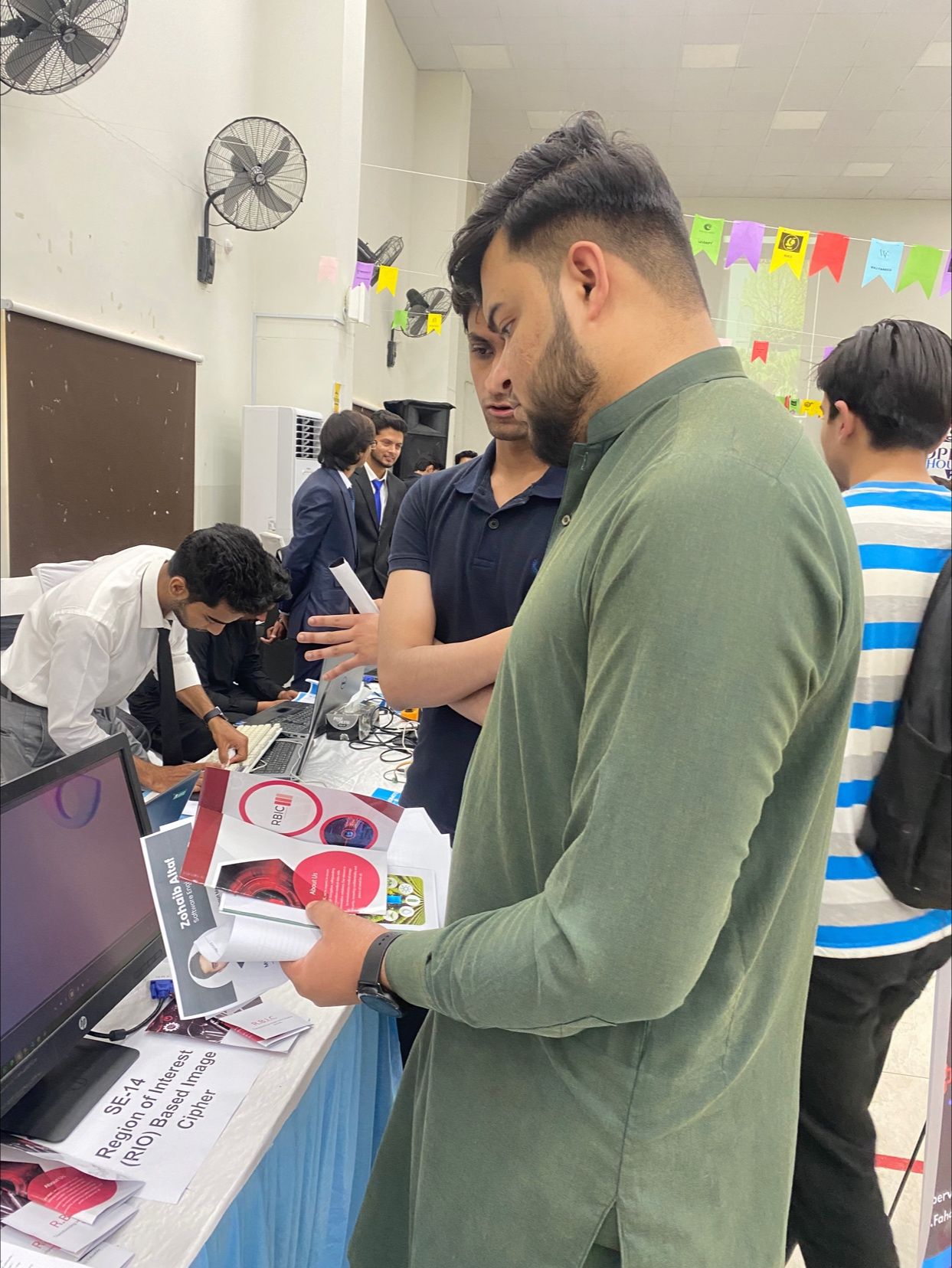


What every Ezitech intern gets
Three things that make this different from a course you watch on a screen.
Live client briefs
You work on real Ezitech projects with real deadlines and real revision rounds, not recycled practice exercises.
A mentor, not a playlist
Weekly reviews with someone who does this work for a living, plus a team of interns around you to build with.
Portfolio and experience letter
You finish with shipped work you are allowed to show and a letter that says exactly what you delivered.
Verified certificate
Issued by Ezitech Institute and verifiable by employers.
Experience letter
On company letterhead, stating exactly what you delivered.
A working vision pipeline
A real-time detection system running on live video.
Interview preparation
CV rewrite, portfolio case study and a technical mock interview.
A route into the team
Top performers are considered first for paid junior roles.
Confidence in review
Twelve weeks of defending your own work to a senior practitioner.
Built for you if
- You are an undergraduate or fresh graduate in CS, IT or engineering
- You are comfortable with Python basics
- You like problems where the real world fights back
- You want a demo you can literally show on a screen
Not a fit if
- You want a certificate without doing the work
- You cannot give 25 hours a week for 12 weeks
- You are looking for a purely theoretical course
- You want to skip review and work alone
Questions people ask
Everything applicants email us about, answered before you apply.
Do I need deep learning experience first?
How many hours a week does it take?
Is it remote or onsite?
Where does the video footage come from?
Can final-year students apply?
How do I apply?
Not sure Computer Vision is the one?
Every AI internship runs three months, hybrid, with the same mentor model. Or take the six-month All-in-One flagship.
Machine Learning
Train, evaluate and deploy models on real, messy data.
View trackDeep Learning
Neural networks trained, tuned and served on real problems.
View trackData Science
From messy data to a decision someone actually makes.
View trackBig Data
Pipelines, warehouses and datasets too large for a laptop.
View trackMake a camera understand what it is seeing
Three months, one shipped piece of real work, a mentor who reviews you every week. Registration takes five minutes.
Ezitech Institute · Rawalpindi, Pakistan · info@ezitech.org · +92 345 5555396